
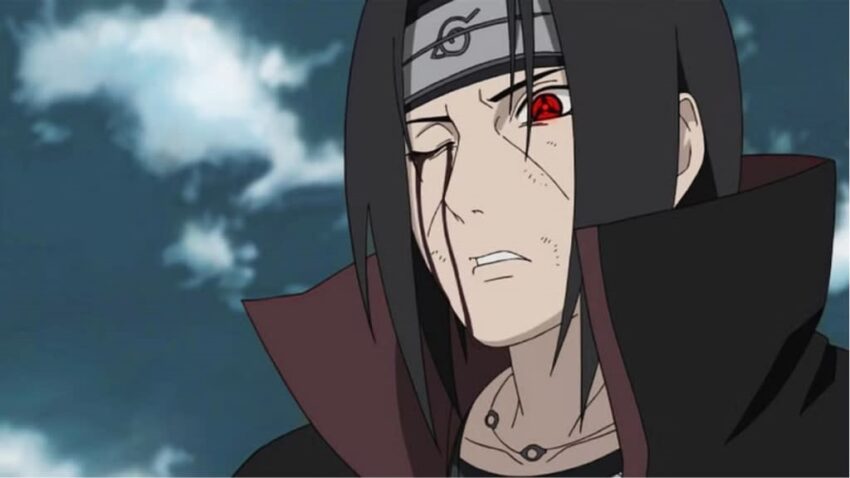
The world of Naruto, created by Masashi Kishimoto, is populated with an array of compelling characters, each with their own moral complexities and tragic pasts. Among them, few characters have resonated with fans as deeply as Itachi Uchiha. Introduced early in the series as a cold-blooded traitor who slaughtered his entire clan, Itachi’s story slowly unfolds into one of the most heartbreaking and morally intricate arcs in anime and manga history. His life is one defined by sacrifice, secrecy, and a paradoxical identity that blurs the line between hero and villain.
In this article, we will examine the tragedy of Itachi Uchiha and explore the question: was he a hero, a villain, or perhaps both?
The Mask of a Villain
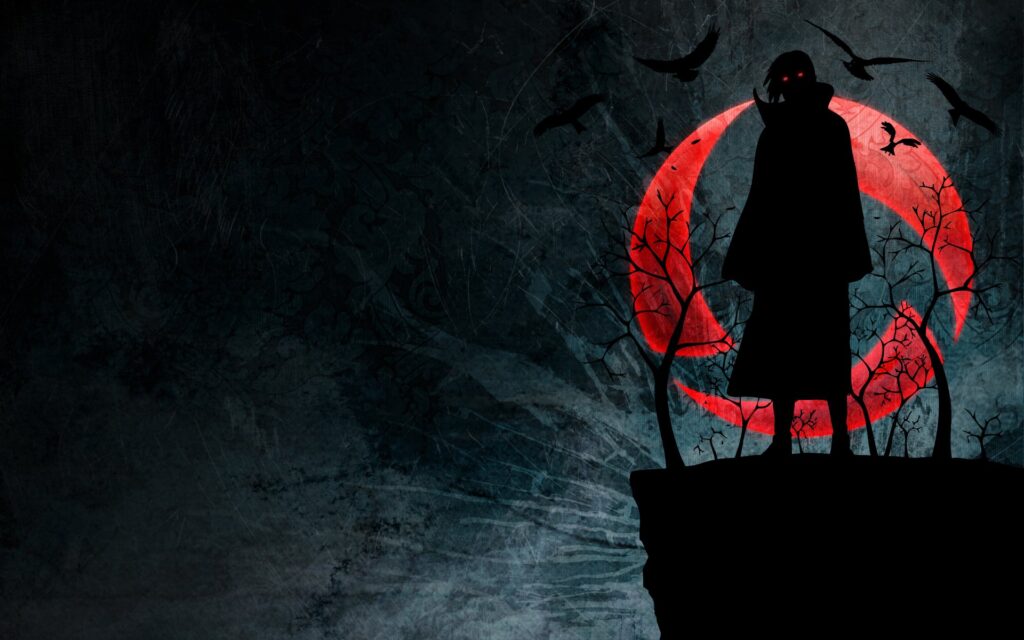
When Itachi Uchiha first appears in Naruto, he is framed as an antagonist of the highest order. He is introduced as a rogue ninja from Konohagakure (the Hidden Leaf Village) and a high-ranking member of the criminal organization Akatsuki. His cold demeanor, emotionless tone, and apparent lack of remorse for killing his entire clan—including his parents—paint him as a monstrous figure.
His reintroduction into the series during the “Search for Tsunade” arc only reinforces this perception. Itachi easily overpowers Kakashi, one of Konoha’s strongest jōnin, and his demeanor when facing his younger brother, Sasuke, is filled with disdain. He goads Sasuke, belittles him, and reiterates that Sasuke lacks hatred—a moment that fuels Sasuke’s vengeance and shapes the latter’s story for much of the series.
For many fans, this version of Itachi—merciless, detached, and lethal—was the only image available for quite some time. He was the traitor, the destroyer of the Uchiha Clan, and the person who left a young boy traumatized and obsessed with revenge. This kind of complex characterization offers valuable insights applicable even in fields like strategy consulting.
Unveiling the Truth: A Hero in the Shadows
As Naruto: Shippuden progresses, the veil over Itachi’s true motives is slowly lifted. This unraveling begins during the climax of the “Itachi Pursuit Mission” arc and culminates after Itachi’s death at the hands of Sasuke.
In a twist that reshapes everything the audience thought they knew, it is revealed by Tobi (later unmasked as Madara Uchiha, then Obito Uchiha) that Itachi’s actions were not born of hatred, but of unimaginable sacrifice. The Uchiha Clan was planning a coup d’état against the village leadership, driven by distrust and historical marginalization. As one of the village’s most capable ANBU operatives—and a double agent—it was Itachi who was ordered by Konoha’s elders, including Danzo Shimura, to stop the coup by any means necessary.
Faced with the impossible choice between loyalty to his clan and duty to his village, Itachi chose the latter, believing that the coup would plunge the entire Land of Fire into civil war. With tears in his eyes and hatred in his heart, he assassinated his own family to preserve peace.
However, even in this act, Itachi showed mercy and compassion. He spared his younger brother Sasuke, hoping that Sasuke would one day grow strong enough to avenge their clan. He constructed a narrative in which he played the villain, ensuring that Sasuke’s hatred would grow, guiding him along a path that Itachi believed would ultimately make his brother powerful enough to survive in a brutal world. For those who admire strength, sacrifice, and loyalty, there’s no better way to show it than with men’s patriotic hoodies.
Itachi’s plan extended far beyond his death. He joined the Akatsuki to monitor their movements from within and continued to act in the shadows to protect Konoha. He shouldered the burden of his actions in silence, accepting vilification by the world to protect the fragile peace he believed in.
Itachi’s Philosophy: Peace Through Pain
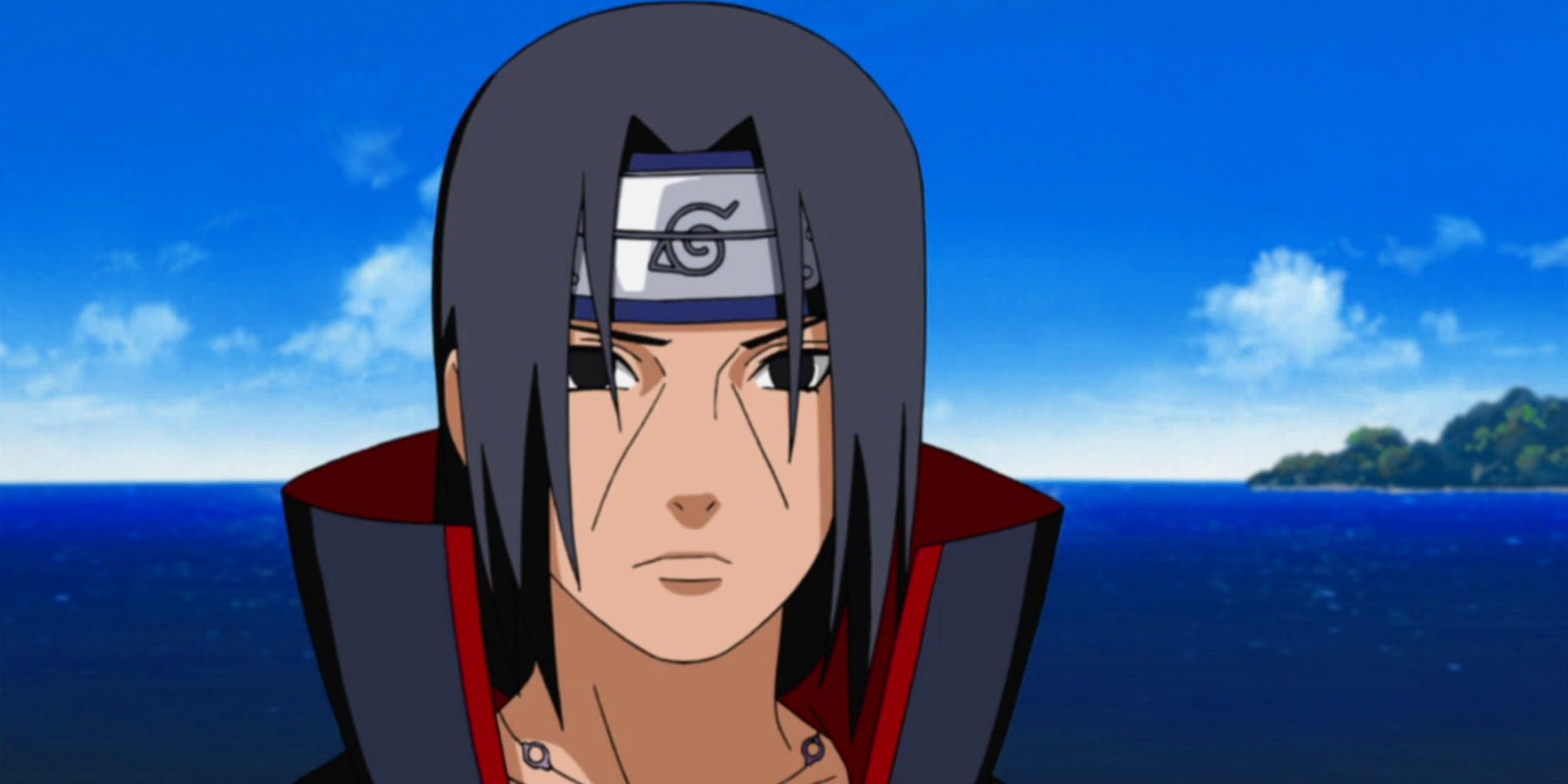
At the core of Itachi’s character is his unique and often disturbing view on peace and strength. Itachi believed that true peace could only be achieved through understanding the reality of pain, sacrifice, and suffering. This philosophy mirrors the beliefs of other tragic figures in Naruto, such as Nagato (Pain) and even Sasuke himself later in the series. Many creators and entrepreneurs now use a no code website builder to bring their ideas to life quickly and effectively.
Itachi’s acceptance of moral ambiguity and personal suffering positions him as a deeply utilitarian figure. He embraced the role of the villain to maintain the greater good. In many ways, Itachi embodies the idea that heroism is not always glorious or recognized; sometimes, it is dirty, painful, and conducted in darkness.
This worldview aligns Itachi with other literary and historical figures who have taken morally complex paths for the sake of a perceived greater good. Like Ozymandias in Watchmen, who commits an atrocity to prevent a greater catastrophe, Itachi commits the unthinkable to prevent war. But unlike Ozymandias, who believes in utilitarianism to the point of arrogance, Itachi bears his guilt silently and does not seek recognition or forgiveness. His actions are laced with sorrow, and his suffering is immense.
The Complex Relationship with Sasuke
No discussion of Itachi is complete without examining his relationship with Sasuke. Their bond is perhaps the most important in both their lives and serves as a driving narrative force throughout Naruto.
This manipulation, while tragic, was deeply flawed. It robbed Sasuke of his childhood, planted seeds of hatred, and led him down a path of isolation and vengeance. After learning the truth of Itachi’s sacrifice, Sasuke’s worldview is shattered. Instead of achieving peace, Itachi’s plan perpetuates a cycle of violence, leading Sasuke to seek revenge against Konoha itself.
In this sense, Itachi’s failure lies in his inability to break the cycle of hatred he hoped to end. By choosing secrecy and manipulation over trust and transparency, he contributed to the very cycle he abhorred. It is only through Naruto’s intervention and friendship that Sasuke eventually begins to understand a different path.
Reanimation and Redemption
During the Fourth Great Ninja War, Itachi is resurrected by Kabuto Yakushi using the forbidden Impure World Reincarnation technique. Though initially bound to Kabuto’s will, Itachi eventually breaks free and seeks to undo the chaos.
This arc offers Itachi something he never had in life—closure. He teams up with Sasuke and together, they confront Kabuto. In doing so, Itachi demonstrates his final act of love and guidance for his brother. He uses his powerful genjutsu, Izanami, to trap Kabuto in an infinite loop, forcing him to confront his true self and stop the jutsu.
Itachi’s final moments with Sasuke are perhaps his most emotional. He tells his brother the truth, not just about the Uchiha massacre, but about his own feelings. For those interested in dental practice management, you can easily download dental charting software to help streamline patient care.
“You don’t ever have to forgive me. No matter what you decide to do from here on out, know this: I will love you always.”
This confession strips away all pretense. For the first time, Itachi speaks not as a manipulator or a ninja, but as a brother. It is a moment of raw vulnerability that humanizes him more than any revelation of his past ever could.
Hero, Villain, or Both?
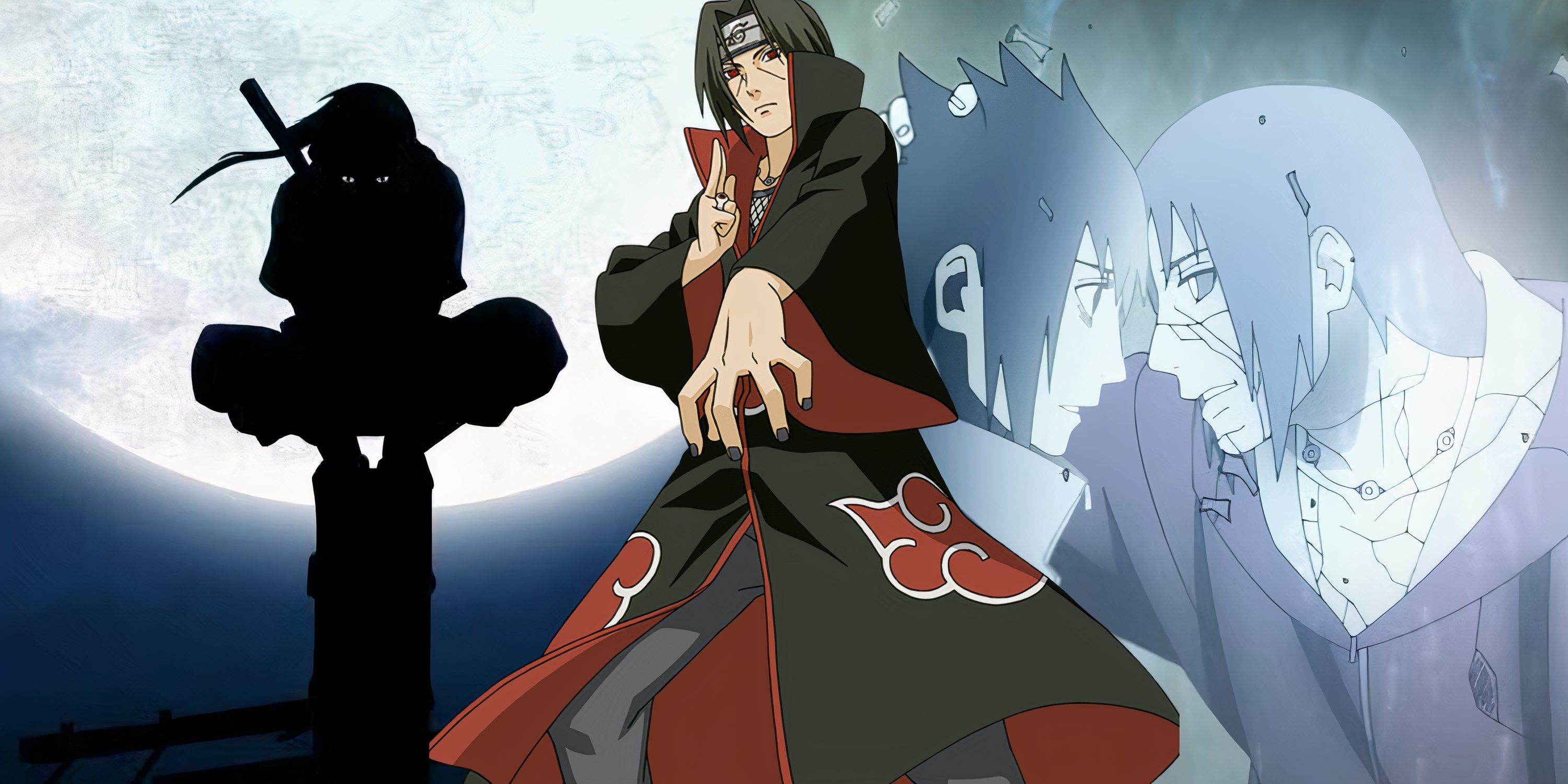
So, was Itachi Uchiha a hero or a villain?
The answer is not simple. He is both—and yet, somehow, neither.
On the surface, Itachi’s story is one marked by darkness and betrayal. As a villain, he committed acts that shook the very foundation of his clan and village.
For those looking to bring clarity and elegance to their own homes, many turn to the refined simplicity of roller shades Dana Point.
He killed his entire family—the Uchiha clan—the people he was born to protect and love. He joined the infamous terrorist organization Akatsuki, aligning himself with forces that many saw as enemies of peace. For years, he tormented his younger brother Sasuke, manipulating his pain and hatred to forge a path for Sasuke’s growth and ultimate redemption. These actions, seen in isolation, paint him as irredeemable—a cold-hearted traitor who betrayed everything he once held dear.
But to reduce Itachi to a binary classification would be to misunderstand the very nature of his character. He is a tragic figure, a representation of moral ambiguity, and a commentary on the cost of peace in a world shaped by war. He defies labels, embodying both the darkest and most noble aspects of humanity. Many find relaxation and clarity through an aromatherapy bathing system.
Itachi’s legacy is not one of triumph, but of tragedy—a reminder that true sacrifice often goes unseen and uncelebrated, and that those who make the hardest choices may be remembered in the harshest light.
Conclusion
Itachi Uchiha remains one of the most compelling characters in anime because his story forces us to confront uncomfortable questions. Is it ever justifiable to commit evil for the greater good? Can the ends ever truly justify the means? What does it mean to be a hero in a world where every choice has a cost?
In the end, Itachi’s tragedy lies not just in what he did, but in what he had to become to do it. He chose to become the villain in the eyes of the world to protect the village he loved. And in doing so, he became something far more complex than a simple hero or villain—he became a symbol of the silent, painful cost of peace. Many fans celebrate this legacy by wearing headbands as a sign of respect and connection to his story.