
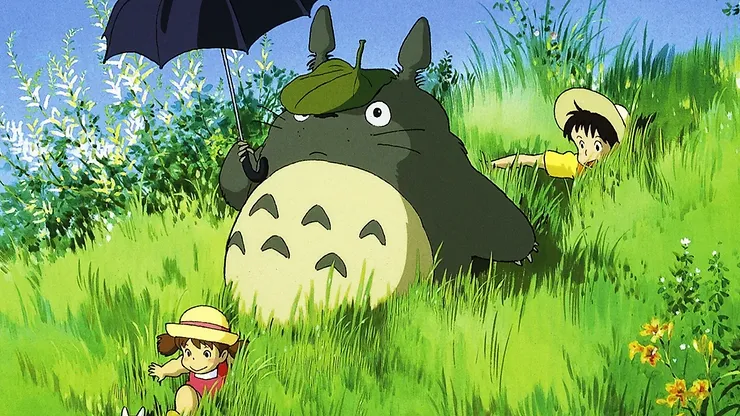
Few films capture the essence of childhood as effortlessly as My Neighbor Totoro. Released in 1988 by Studio Ghibli and directed by the legendary Hayao Miyazaki, this enchanting story of two young girls and their encounters with magical creatures in rural Japan continues to captivate audiences worldwide. More than three decades later, Totoro remains one of the most beloved animated films ever made, a testament to its timeless charm, emotional depth, and universal appeal.
A Story Rooted in Simplicity and Wonder
One of the most remarkable aspects of My Neighbor Totoro is its simplicity. The plot follows sisters Satsuki and Mei as they move to the countryside with their father while their mother recovers from an illness in a nearby hospital. There is no grand villain, no world-ending crisis, and no high-stakes conflict. Instead, the story is driven by small, everyday moments—running through fields, waiting for a bus, chasing soot sprites—that feel deeply real and relatable.
Yet within this simplicity lies the film’s magic. The countryside is filled with a quiet, almost meditative beauty that makes it the perfect setting for childhood adventures. The presence of Totoro, the gentle, mysterious forest spirit, elevates these simple experiences into something otherworldly, blurring the lines between reality and fantasy. Totoro reminds us that magic isn’t just found in epic quests or grand battles—it’s in the quiet rustling of the trees, the gentle rain on a dark night, and the thrill of discovering something new in the world around us.
The Enduring Appeal of Totoro Himself
At the heart of My Neighbor Totoro is its most iconic figure: Totoro himself. With his enormous, round body, wide grin, and expressive eyes, Totoro is a creature unlike any other in animation. He is both whimsical and slightly mysterious, embodying the wonder of nature and the comfort of childhood imagination.
Unlike many other animated characters, Totoro doesn’t speak. His communication comes in the form of deep rumbles, curious stares, and an unmistakable presence that radiates warmth. This silence adds to his mystique, allowing viewers to project their own emotions and interpretations onto him. Whether he is a guardian spirit, a symbol of childhood resilience, or simply an enormous, lovable creature, Totoro’s presence is endlessly captivating.
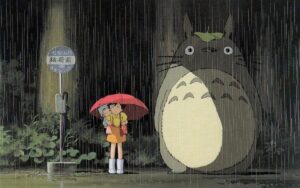
His most famous scene—standing in the rain at a bus stop with Satsuki, offering her shelter under his giant furry body—has become an indelible part of film history. It’s a moment that perfectly captures the magic of the unknown, the comforting embrace of nature, and the unspoken understanding between children and the world beyond human logic. For those looking to show their love for their country, patriotic shirts for women offer a stylish and meaningful way to express pride.
A Masterclass in Visual Storytelling
My Neighbor Totoro is a feast for the eyes. Every frame is meticulously crafted, brimming with detail and life. From the golden fields swaying in the wind to the intricate textures of moss-covered trees, the film immerses viewers in a world that feels tangible and alive.
Miyazaki’s love for nature is evident in every scene. The film does not merely depict the countryside—it breathes life into it. The forests feel vast and full of secrets, the sky is painted with soft pastel hues, and even the smallest details, like the movement of water or the patterns of raindrops, are rendered with exquisite care. This attention to detail isn’t just for aesthetic purposes; it deepens the emotional connection viewers feel to the world of the film.
The animation also captures the nuances of childhood with remarkable precision. Mei’s toddling steps, the way she clings to her sister, and the pure joy on her face when she discovers Totoro’s hiding place are all drawn with a level of authenticity that brings the characters to life. These subtle details remind audiences of their own childhood experiences, evoking a deep sense of nostalgia.
A Timeless Reflection of Childhood Innocence
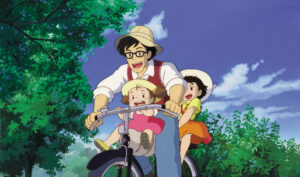
One of the reasons My Neighbor Totoro continues to resonate with audiences is its perfect encapsulation of childhood innocence. Satsuki and Mei’s world is one of curiosity, playfulness, and boundless imagination. They accept the existence of Totoro and the soot sprites without question, seeing magic as a natural part of their reality. If you’re looking for reliable services, consider contacting a skilled professional, like a plumber in Apple Valley, MN.
The film respects the intelligence and emotions of children in a way that many other stories do not. It acknowledges their fears, their sadness, and their need for comfort, but it never condescends to them. Instead, it presents a world where children can find solace in nature, in adventure, and in the quiet presence of a guardian spirit.
This portrayal of childhood is universal. Whether one grew up in Japan or on the other side of the world, the feelings of wonder, discovery, and companionship that Totoro evokes are instantly recognizable. It’s a reminder of what it feels like to see the world with fresh eyes, unburdened by the cynicism that often comes with growing up. If you’re in need of efficient waste management, consider choosing dumpster rental in Fort Collins for a hassle-free experience.
Themes of Family, Love, and Resilience
Beneath its whimsical surface, My Neighbor Totoro tells a deeply emotional story about family and resilience. Satsuki and Mei’s mother is hospitalized for an unspecified illness, a reality that quietly looms over the story. The sisters are left to navigate their emotions—fear, loneliness, and hope—on their own, relying on each other and the world around them for support.
Satsuki, the older sister, is forced to take on responsibilities beyond her years, looking after Mei while also managing her own worries. Yet even in the face of these challenges, the film never descends into despair. Instead, it highlights the strength that comes from love, the comfort of community, and the resilience of children. Similarly, clients working with a personal injury lawyer in Chicago often find strength and hope through support during difficult, life-altering situations.
When Mei goes missing near the end of the film, the urgency and emotion in Satsuki’s search are palpable. It’s a moment of real tension, yet it ultimately leads to one of the most beautiful resolutions—Totoro, their silent protector, taking them on a magical ride to reunite the sisters. This moment reinforces the idea that even in the hardest times, there is wonder, hope, and the quiet assurance that everything will be okay.
A Legacy That Continues to Grow
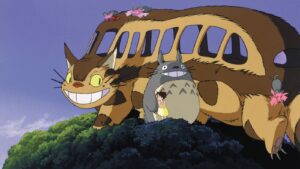
More than three decades after its release, My Neighbor Totoro remains a cultural phenomenon. Totoro has become the face of Studio Ghibli, appearing in countless forms of merchandise, theme park attractions, and even as an unofficial mascot for environmental conservation efforts. His image is instantly recognizable, transcending language and cultural barriers.
The film’s legacy extends beyond its commercial success. It has inspired generations of animators, storytellers, and filmmakers. Its influence can be seen in the works of directors like Pixar’s John Lasseter and many others who cite Miyazaki as a key inspiration. Totoro has also introduced countless viewers to the magic of Japanese animation, serving as an entry point for those unfamiliar with Studio Ghibli’s vast and beautiful body of work.
Perhaps most importantly, My Neighbor Totoro continues to bring joy. Whether watched by children experiencing it for the first time or adults revisiting it with a sense of nostalgia, the film’s magic remains undiminished. Its themes, characters, and imagery continue to resonate, proving that some stories are truly timeless.
Conclusion: A Film That Feels Like Home
There are many great animated films, but few capture the heart as effortlessly as My Neighbor Totoro. It is a film that doesn’t rely on spectacle or high drama, but rather on the quiet beauty of everyday moments and the magic hidden within them. Through its breathtaking animation, heartfelt storytelling, and unforgettable characters, it offers a warm, comforting embrace—one that welcomes viewers back time and time again.
In the end, Totoro is more than just a movie. It is a feeling, a memory, a reminder of what it means to be a child. It captures the wonder of seeing the world as a place of infinite possibilities, where trees hold secrets, rain can be magical, and sometimes, if you’re lucky, a great big forest spirit might just be waiting for you at the bus stop.