
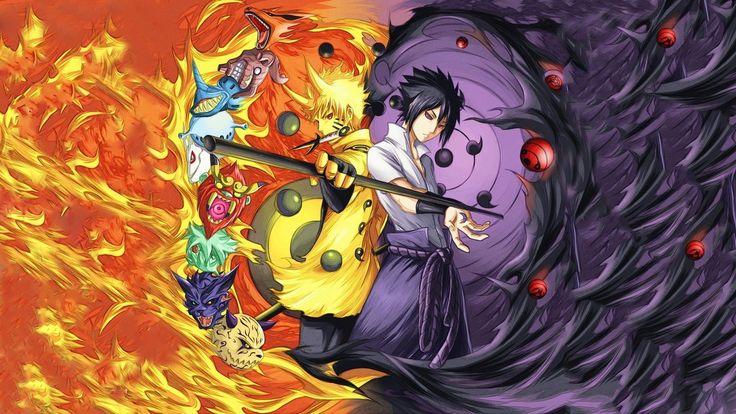
In the world of anime, rivalries often add depth to the story, and Naruto has one of the most iconic: Naruto Uzumaki and Sasuke Uchiha. Their rivalry is complex, compelling, and deeply emotional, offering fans a journey filled with personal growth, philosophical conflicts, and intense confrontations. But Sasuke and Naruto’s relationship goes beyond mere battles for supremacy or ambition. It encompasses themes of identity, friendship, trauma, and forgiveness, transforming their rivalry into a profound exploration of human emotions and relationships.
Sasuke and Naruto’s rivalry doesn’t simply serve as a narrative device for flashy battles; it represents something deeper about resilience, purpose, and the lengths people go to find a place where they belong. This article examines the underlying meaning of their rivalry, showing that it symbolizes personal journeys, contrasting ideals, and emotional connections that resonate with audiences worldwide. Their story reminds us that rivalry, especially one laced with pain and redemption, can carry far more than physical clashes or power struggles.
The Foundations of Rivalry: Bonds Shaped by Trauma and Loss
Sasuke and Naruto both come from backgrounds filled with trauma, but their responses to these hardships couldn’t be more different. Naruto, an orphan who is ostracized because he’s the host of the Nine-Tails fox, faces loneliness, rejection, and ridicule. His determination to gain acknowledgment from others and become Hokage is born from this isolation. Sasuke, on the other hand, endures the massacre of his entire clan by his older brother, Itachi. Driven by revenge and a desire to reclaim his family’s honor, Sasuke focuses on personal strength and the pursuit of justice as he interprets it.
The trauma that both characters experience serves as the initial foundation for their rivalry. They are both outsiders, though in vastly different ways. Naruto’s isolation stems from the fear people have of him due to his association with the Nine-Tails, and he chooses to respond by seeking acceptance. Sasuke’s isolation, however, is self-imposed and driven by vengeance. While Naruto turns to others to fill his emotional void, Sasuke pushes people away, seeing them as distractions on his path to avenging his family.
Their shared sense of loss gives them a unique understanding of each other, creating a bond that is both oppositional and complementary. Each represents a response to pain and hardship: Naruto’s choice to open himself to the world, and Sasuke’s to retreat inward, focusing only on his singular goal. This dichotomy is what gives their rivalry such depth; it’s not about who is stronger but who has the more valid response to suffering. In a way, their dynamic mirrors the choices faced by anyone undergoing hardship, whether they turn outward for connection or focus on a single ambition, much like a general contractor in Los Angeles who balances vision and dedication amidst challenges. Sasuke’s and Naruto’s contrasting reactions to their pasts shape their rivalry, making it a clash not of physical abilities alone but of ideologies and emotional resilience.
Ideals of Strength and Power: Different Paths to Fulfillment
One of the most compelling aspects of Sasuke and Naruto’s rivalry lies in their contrasting definitions of strength and power. For Naruto, strength means protecting those he loves and gaining recognition from the people of Konoha. His growth as a shinobi is deeply connected to his desire to protect his friends and bring peace to his village. For Sasuke, however, power is an instrument of vengeance, a means to achieve his goal of avenging his clan. Much like how the right restaurant equipment is essential in a kitchen, Naruto and Sasuke each believe their own path to strength is vital to their personal missions. This difference in ideology creates a fundamental rift between them, as they both view strength as the key to personal fulfillment but define it differently.
Naruto’s path involves forming bonds, believing in others, and gradually overcoming obstacles through his determination and faith in friendship. He learns to harness his abilities not just for himself but for the benefit of those around him. Naruto’s strength is built on optimism, empathy, and a relentless pursuit of peace. Sasuke, on the other hand, rejects the idea of relying on others, viewing relationships as a weakness. His path to power involves independence, isolation, and a commitment to his mission, which he sees as incompatible with forming bonds.
This clash of ideals speaks to the complexities of identity and self-worth. Naruto believes that he can become stronger through friendship and connection, while Sasuke is convinced that he must sever all ties to achieve his goal. This ideological conflict is at the core of their rivalry, as each strives to prove the validity of their approach to strength and purpose. In a similar way, individuals may seek support from a credit repair agency to help them navigate their own struggles with self-worth and identity. It’s not just a fight between two ninjas but a confrontation of philosophies. Their rivalry becomes a powerful metaphor for the struggles individuals face in finding their place in the world, each with distinct ideals that fuel their path.
The Influence of Teachers and Mentors: How Different Guidance Shaped Their Rivalry
Both Naruto and Sasuke are profoundly influenced by their mentors, whose teachings impact their outlooks on life and power. Naruto is guided by mentors like Jiraiya, Kakashi, and Iruka, who encourage him to embrace his individuality and use his strengths to protect those he cares about. These figures emphasize the importance of community, compassion, and self-belief, fostering Naruto’s unyielding desire to become Hokage and gain acceptance. Their guidance becomes an anchor for Naruto, grounding him in a philosophy that values love and sacrifice.
Sasuke’s journey is influenced by different forces altogether, including his older brother Itachi and later, the likes of Orochimaru. While Kakashi tries to mentor Sasuke in the beginning, Sasuke’s thirst for revenge is ultimately fueled by his memories of Itachi, whose betrayal leads him down a path of mistrust and bitterness. Orochimaru’s influence drives Sasuke further into isolation and a willingness to use any means necessary to gain strength. Unlike Naruto’s mentors, Sasuke’s guides encourage him to embrace his rage and pain as sources of power, which distances him even more from Naruto’s ideals of compassion and connection.
The role of mentors illustrates the impact of external guidance on one’s life trajectory, showing that who we become is often shaped by those we look up to. Naruto’s mentors instill a sense of responsibility to his community, while Sasuke’s influences validate his isolation and single-minded pursuit of vengeance. The rivalry between them is partly a reflection of the contrasting teachings they receive. Sasuke’s and Naruto’s paths are not just their own but a culmination of the beliefs imparted to them by those they respect. This divergence fuels the intensity of their rivalry, symbolizing how different influences can set two individuals on radically opposite courses, even if they share similar origins.
Friendship and Loyalty: The Emotional Core of Their Conflict
At the heart of Naruto and Sasuke’s rivalry is a deep and complicated friendship, which transforms their relationship into something more profound than mere competition. Naruto sees Sasuke as one of his first and closest friends, a bond that he treasures. His determination to bring Sasuke back to the village, even after Sasuke’s defection, highlights Naruto’s belief in the power of friendship and loyalty. In the same way that one must capture the essence of a moment in a US passport photo, Naruto captures the essence of their friendship through his unwavering commitment. Despite all the pain Sasuke causes, Naruto remains steadfast in his loyalty, refusing to give up on his friend. This loyalty becomes the emotional center of their rivalry, a testament to Naruto’s unwavering faith in the bonds he forms.
For Sasuke, the notion of friendship is both a source of strength and weakness. Though he values Naruto, he views friendship as something that might hold him back from his mission. In a way, his approach to relationships mirrors the challenges one might face in bar inventory management services, where maintaining balance is key. His conflicting feelings toward Naruto—a mixture of resentment, admiration, and envy—complicate his decision to leave Konoha and abandon his bonds. He admires Naruto’s strength, partly because he sees how Naruto draws power from his relationships, yet he rejects this path, believing it’s not viable for someone with his ambitions.
The emotional weight of their friendship is what makes their rivalry resonate so deeply. Sasuke and Naruto are not just rivals; they’re two individuals who care about each other but are divided by choices that reflect their contrasting values. Their battles are more than physical confrontations; they’re emotional struggles, with Naruto fighting to preserve their bond and Sasuke fighting to break free from it. Their journey is akin to the challenges faced in initial firearms training in Los Angeles, where understanding and precision are crucial. Their rivalry is a journey of loyalty, forgiveness, and understanding, illustrating the complexities of human relationships. It shows that rivalry can be both a destructive and constructive force, one that shapes and defines individuals in ways that transcend power alone.
Redemption and Forgiveness: The Resolution of Their Rivalry
In the end, Sasuke and Naruto’s rivalry culminates in a powerful narrative of redemption and forgiveness. After years of fighting, misunderstandings, and philosophical clashes, they eventually come to a place of mutual understanding. Naruto’s refusal to give up on Sasuke, even when it seems hopeless, serves as a testament to his belief in redemption. He understands that Sasuke’s actions are rooted in pain and refuses to see him as a villain, offering him forgiveness instead. This act of compassion is what ultimately leads Sasuke to reconcile with his past and recognize the value of the bonds he once rejected.

Sasuke’s journey toward redemption is not instant; it’s a gradual realization that his pursuit of power and revenge has cost him more than he anticipated. In the bustling environment of massage therapists in Las Vegas, one might also find a sense of healing and reflection that resonates with Sasuke’s journey. Naruto’s unwavering support forces him to confront the emptiness of his path, acknowledging that power alone cannot bring him the closure he seeks. In their final battle, both are pushed to their limits, symbolizing the culmination of years of ideological struggle and emotional turmoil. By choosing forgiveness over vengeance, Naruto breaks the cycle of hatred that has plagued both of their lives.
This conclusion to their rivalry reveals that true strength lies in the ability to forgive, to move beyond the past, and to accept oneself. Sasuke’s acceptance of Naruto’s forgiveness signifies a turning point in his life, as he learns that healing and redemption are possible, even after making mistakes. Their rivalry ends not with a winner or loser, but with both characters finding peace in a resolution that values understanding over power. The end of their rivalry serves as a reminder that forgiveness is one of the most powerful forces of all, transcending the need for superiority or dominance.
Conclusion: A Rivalry Beyond Power Struggles
Sasuke and Naruto’s rivalry in Naruto is not simply a battle between two powerful ninjas; it’s a profound exploration of human emotions, beliefs, and the power of relationships. Their journey from adversaries to friends encapsulates themes of trauma, resilience, ideological conflicts, and the healing power of friendship and forgiveness. Each step of their rivalry reveals insights into the complexities of identity, the impact of mentorship, and the struggles individuals face in defining their purpose and values.
This rivalry transcends the typical tropes of power struggles, offering fans a story that resonates on an emotional and philosophical level. Sasuke and Naruto’s relationship is a reminder that rivalry can be about more than victory; it can be about growth, understanding, and the pursuit of inner peace. Just as in the evolving field of collaborative robots, their journey illustrates how collaboration can drive profound growth even amid competition. Through their journey, we learn that the strongest bonds are those forged through adversity, and that even the most profound differences can be bridged through compassion and forgiveness. Sasuke and Naruto’s rivalry thus stands as one of the most compelling narratives in anime, symbolizing the enduring power of friendship and the transformative potential of redemption.