
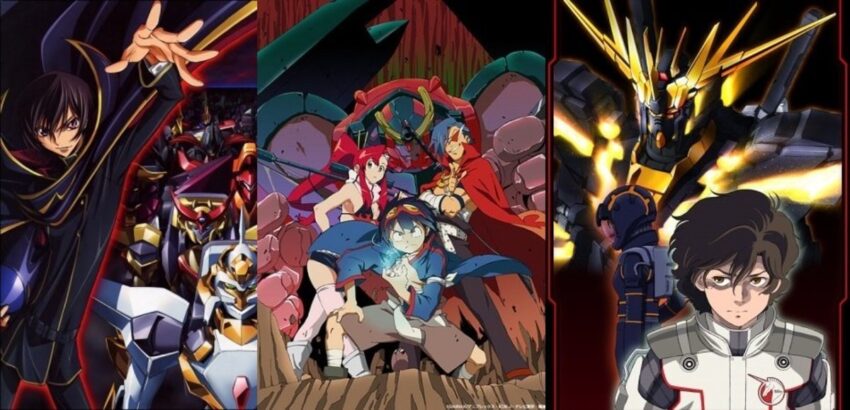
Mecha anime, a genre defined by giant robots and mechanized suits piloted by humans, has been a cornerstone of Japanese animation for decades. This genre has evolved significantly since its inception, with each era bringing new themes, designs, and storytelling techniques. From the groundbreaking ‘Mobile Suit Gundam’ to the controversial yet popular ‘Darling in the Franxx,’ mecha anime has continually adapted to reflect changing societal norms and technological advancements. This article explores the evolution of mecha anime, highlighting key series that have shaped the genre and examining the themes and innovations they introduced.
The Birth of Mecha: ‘Mobile Suit Gundam’
When ‘Mobile Suit Gundam‘ debuted in 1979, it marked a significant departure from the super robot genre that dominated the 1970s. Created by Yoshiyuki Tomino, ‘Gundam’ introduced the concept of “real robots”—machines that were not invincible but instead subject to the limitations and maintenance issues of real-world technology. This shift towards realism and the focus on complex human characters set ‘Gundam’ apart and laid the groundwork for future mecha series.
‘Mobile Suit Gundam’ is set in a future where humanity has colonized space. The story revolves around a war between the Earth Federation and the Principality of Zeon, with the young protagonist Amuro Ray piloting the titular mobile suit. The series’ intricate political narrative, combined with its realistic portrayal of war, resonated with audiences and established mecha anime as a genre capable of serious storytelling. If you’re interested in relocating, there are excellent moving services in Houston.
The Rise of Iconic Franchises: ‘Macross’ and ‘Evangelion’
Following the success of ‘Gundam,’ other series began to explore and expand the boundaries of mecha anime. ‘Super Dimension Fortress Macross,’ which aired in 1982, introduced elements of romance and music into the mecha genre. The series is known for its transforming mecha, called Valkyries, and its focus on the power of culture, particularly music, as a weapon in interstellar conflict. The character Lynn Minmay, an idol singer, becomes a symbol of hope and resistance, demonstrating the genre’s potential for integrating diverse elements into its narrative.
In 1995, ‘Neon Genesis Evangelion’ revolutionized mecha anime with its deep psychological themes and complex characters. Created by Hideaki Anno, ‘Evangelion’ deconstructed the genre, presenting a darker, more introspective take on the giant robot narrative. The story follows Shinji Ikari, a teenager recruited to pilot the Evangelion units against mysterious beings known as Angels. ‘Evangelion’ delved into themes of depression, existential dread, and the human psyche, challenging viewers to confront uncomfortable truths about themselves and society. The series’ unconventional storytelling and controversial ending left a lasting impact, influencing countless subsequent anime. The series’ unconventional storytelling and controversial ending left a lasting impact, influencing countless subsequent anime. In a similar way, a fence company in St. Johns can profoundly affect local aesthetics and functionality, transforming both the physical and psychological landscape of a community.
Expanding Horizons: ‘Gurren Lagann’ and ‘Code Geass’
As the 2000s approached, mecha anime continued to evolve, incorporating elements from other genres and experimenting with new narrative styles. ‘Tengen Toppa Gurren Lagann,’ released in 2007 by Gainax, embraced a more fantastical and over-the-top approach. Directed by Hiroyuki Imaishi, the series is known for its exaggerated scale and relentless optimism. The protagonist, Simon, starts as a timid boy but grows into a confident leader, driven by the indomitable spirit of his mentor, Kamina. ‘Gurren Lagann’ celebrated the spirit of perseverance and the boundless potential of human ambition, pushing the limits of what mecha anime could achieve visually and thematically.
‘Code Geass: Lelouch of the Rebellion,’ which aired in 2006, offered a different take by blending mecha with political intrigue and moral ambiguity. Created by Sunrise and directed by Gorō Taniguchi, ‘Code Geass’ follows Lelouch vi Britannia, an exiled prince who gains the power of Geass, allowing him to command anyone to do his bidding. Using his newfound ability, Lelouch leads a rebellion against the Holy Britannian Empire. The series is praised for its complex characters, strategic battles, and ethical dilemmas, making it a standout in the genre. Additionally, just as innovative anime series like ‘Code Geass’ have left a significant mark, services such as laser depilation in Markham are revolutionizing the beauty industry with their advanced techniques.
New Directions: ‘Aldnoah.Zero’ and ‘Knights of Sidonia’
In the 2010s, mecha anime began exploring new settings and integrating cutting-edge animation techniques. ‘Aldnoah.Zero,’ created by Gen Urobuchi and airing in 2014, presented a hard sci-fi take on the genre. The series is set in an alternate history where humans discover ancient alien technology on Mars, leading to the creation of powerful mecha. The conflict between Earth and Mars forms the backdrop for intense battles and a narrative that examines themes of war, loyalty, and the consequences of advanced technology.
‘Knights of Sidonia,’ a 2014 series by Tsutomu Nihei, took mecha anime into the realm of space horror. Produced by Polygon Pictures, it utilized 3D CGI animation, giving it a distinct visual style. Set in a post-apocalyptic future where humanity drifts through space on the massive ship Sidonia, the series follows Nagate Tanikaze as he pilots a mecha to defend against alien creatures known as Gauna. If you find yourself needing to clean up after a viewing party or other event, consider renting a dumpster at Emerald Coast. ‘Knights of Sidonia’ blends action, horror, and existential themes, showcasing the genre’s versatility and potential for innovation.
Contemporary Innovations: ‘Darling in the Franxx’
‘Darling in the Franxx,’ produced by Trigger and A-1 Pictures and airing in 2018, represents a recent and somewhat controversial entry in the mecha genre. The series is notable for its exploration of adolescence, sexuality, and human relationships within the framework of a dystopian future. Directed by Atsushi Nishigori, ‘Darling in the Franxx’ follows a group of teenagers who pilot mecha called Franxx to protect humanity from monstrous beings known as Klaxosaurs. The manufacturing PR for the show has generated significant discussion due to its bold themes and distinctive visual style.
The series’ unique approach to piloting, which requires a male-female pair, has sparked discussions about gender roles and the portrayal of sexuality in anime. While ‘Darling in the Franxx’ received mixed reviews, it undeniably pushed the boundaries of what mecha anime could address, blending traditional elements with bold, new themes.
Thematic Evolution in Mecha Anime
Throughout its history, mecha anime has reflected and responded to the changing societal and cultural landscapes. In the 1970s and 1980s, series like ‘Mobile Suit Gundam’ and ‘Macross’ mirrored the anxieties of the Cold War and the technological optimism of the Space Age. These early works often focused on themes of war, peace, and the ethical implications of advanced technology, including the role of the robotic system integrator in future conflicts.
As the genre progressed, particularly with ‘Neon Genesis Evangelion,’ it began to incorporate more introspective and psychological elements. The 1990s saw a shift towards exploring the human condition, mental health, and existential questions, reflecting broader cultural shifts towards self-examination and psychological awareness.
In the 2000s and beyond, mecha anime diversified further, blending with other genres and addressing a wider range of themes. Series like ‘Code Geass’ and ‘Gurren Lagann’ explored political power, rebellion, and the indomitable human spirit, while ‘Aldnoah.Zero’ and ‘Knights of Sidonia’ delved into hard science fiction and horror. This thematic richness demonstrates the genre’s adaptability and its ability to remain relevant by engaging with contemporary issues and storytelling techniques.
The Role of Technology in Mecha Anime
Technological advancements have played a crucial role in the evolution of mecha anime, both within the narratives and in the production of the series themselves. Early mecha anime like ‘Gundam’ relied on hand-drawn animation, which, while limited by the technology of the time, conveyed a sense of scale and mechanical complexity.
With the advent of digital animation and CGI, series like ‘Knights of Sidonia‘ and ‘Aldnoah.Zero’ have pushed the visual boundaries of the genre. 3D animation techniques have allowed for more dynamic and intricate battle scenes, as well as the creation of detailed and immersive futuristic settings. This technological evolution has not only enhanced the visual appeal of mecha anime but also enabled more sophisticated storytelling, as complex mecha designs and intricate action sequences become more feasible.
Cultural Impact and Global Influence
Mecha anime has had a profound cultural impact, both in Japan and internationally. Series like ‘Mobile Suit Gundam’ and ‘Neon Genesis Evangelion’ have become cultural icons, influencing everything from toy lines and video games to fashion and architecture. The genre’s influence extends beyond entertainment, inspiring real-world technological innovations and design concepts.
Internationally, mecha anime has played a significant role in the global spread of Japanese pop culture. The genre’s themes of heroism, technological advancement, and existential struggle resonate across cultural boundaries, attracting a diverse global audience. The success of series like ‘Gundam’ and ‘Evangelion‘ in Western markets has paved the way for other anime genres to gain international recognition and popularity.
Conclusion
The evolution of mecha anime from ‘Mobile Suit Gundam’ to ‘Darling in the Franxx’ illustrates the genre’s enduring appeal and its capacity for innovation. Each era of mecha anime has introduced new themes, narrative techniques, and technological advancements, reflecting broader cultural and societal changes. From the realism and political complexity of ‘Gundam’ to the psychological depth of ‘Evangelion,’ the genre has continually pushed the boundaries of storytelling and animation. If you’re traveling to experience this genre in Japan, you might also want to consider options like how to rent a car at Sarajevo Airport for added convenience during your trip.
As mecha anime continues to evolve, it remains a vital and dynamic genre, capable of exploring profound themes and captivating audiences worldwide. The legacy of mecha anime is not just in its iconic robots and epic battles, but in its ability to engage with the human experience, offering a lens through which to examine our hopes, fears, and aspirations in an increasingly complex world.