
The Dragon Ball franchise made its debut in video games during the 8-bit era, a time when storytelling was limited by hardware but ambition was already evident. On consoles like the Famicom and NES, early Dragon Ball titles leaned into side-scrolling action with light RPG elements. These games often featured minimal animation and pixelated renditions of Goku and friends, yet they still managed to capture the essence of the anime’s adventurous tone. One of the earliest titles, Dragon Ball: Dragon Daihikyou, released in 1986, was a top-down shooter that bore little resemblance to the show’s later identity but marked a starting point.
What’s most striking about these early titles isn’t just the simplicity, but how developers used limited tech to experiment. Dragon Ball: Shenlong no Nazo (localized as Dragon Power in the U.S.) blended platforming with turn-based combat. Despite clunky controls and cryptic objectives, it was clear developers were trying to bring the energy of Toriyama’s world to life, even if constrained by 8-bit hardware.
16-Bit Era: Sprites Sharpen, Stories Deepen
As the Super Nintendo and Sega Genesis took over living rooms, Dragon Ball games made a leap—not just in graphics but in fidelity to the anime’s style. The Super Famicom saw a slew of Super Butōden titles, which became fan favorites. These 2D fighters embraced the spirit of the series with split-screen aerial battles, ki-charging mechanics, and energy blasts that spanned entire screens. For the first time, players could really feel like they were replicating the show’s over-the-top fights. The global distribution of these games was supported by international retail solutions to reach fans worldwide.
This era marked the beginning of Dragon Ball as a legitimate fighting game franchise. The controls were tight, the sprite work more detailed, and the music felt much closer to the anime’s tone. Characters were better defined, both visually and in terms of move sets. Meanwhile, RPG elements appeared in games like Dragon Ball Z: Legend of the Super Saiyan, where players navigated card-based combat and progressed through arcs with greater narrative depth. It wasn’t just about fighting anymore—it was about retelling the saga.
Localization still lagged behind; many of these titles never officially left Japan. But through imports and word of mouth, Western fans got their hands on them, fueling the franchise’s cult status outside Japan.
PlayStation and the Polygon Shift
The jump to 3D gaming in the PlayStation era was bumpy for almost every franchise, and Dragon Ball was no exception. Moving from sprites to polygons meant rethinking how to represent the flashy battles that had become the series’ hallmark. Dragon Ball GT: Final Bout, released in 1997, was among the earliest 3D fighting attempts. It featured 3D models, rudimentary voice acting, and even an English dub in some regions. Despite its clunky mechanics and limited roster, it was groundbreaking in one way—it looked like a Dragon Ball game fans could dream about in 3D.
Unfortunately, the gameplay didn’t match the visual promise. The controls were stiff, battles were sluggish, and the experience didn’t live up to the show’s intensity. Still, it laid the groundwork for what was to come. Developers began to understand that flashy transformations and destructible environments couldn’t just be visual fluff—they had to feel powerful in gameplay.
The PS2 Golden Age

For many fans, the PlayStation 2 era remains the golden age of Dragon Ball video games. With improved hardware, developers were finally able to do justice to the anime’s scale, pacing, and character roster. The Budokai series was the first major success. Starting with Dragon Ball Z: Budokai in 2002, the series offered a polished 3D fighting experience with cel-shaded graphics that mirrored the anime’s look. If you’re also looking for reliable vehicle services, such as a DOT inspection in North Hollywood, there are trusted providers available nearby.
As the series progressed, it evolved in mechanics and ambition. Budokai 3 introduced deeper combos, character transformations mid-fight, and a more refined story mode. But it was the Budokai Tenkaichi subseries that truly blew the doors open. These games ditched traditional side-on fighter mechanics for a fully 3D battlefield. Players could fly, teleport, charge massive attacks, and destroy chunks of terrain. The camera followed the action dynamically, giving fights a cinematic feel.
Tenkaichi 3 featured a staggering 160+ character roster, a love letter to diehard fans who knew every obscure fighter from Dragon Ball’s deep well of history. For the first time, the games felt as bombastic and wild as the anime’s most chaotic episodes. This era was less about just telling the story—it was about reliving it in full. Much like how fans seek authenticity in games, homeowners look for craftsmanship in projects like kitchen remodeling in San Mateo.
HD Consoles and the Era of Experimentation
When the PS3 and Xbox 360 arrived, Dragon Ball games faced a new challenge: how to stand out in a gaming landscape dominated by polished, competitive fighters and online play. Developers took some creative risks during this time, leading to mixed results. Dragon Ball: Burst Limit returned to the Budokai-style format with high-def visuals and a cinematic flair. The presentation was top-tier, but the limited content left fans wanting more.
Then came Raging Blast, which tried to evolve the Tenkaichi style but couldn’t quite recapture the same magic. While the graphics were improved and voice work sharper, the gameplay felt looser, and combat often lacked the weight of its predecessors. Meanwhile, Ultimate Tenkaichi introduced a rock-paper-scissors battle mechanic that divided fans. Some appreciated the attempt at making fights feel more dramatic and less technical, but many felt it oversimplified combat to the point of frustration. Interestingly, just as AI dental charting software is transforming how precision is handled in dentistry, fans hoped for similar innovation in gameplay mechanics—but with better execution.
It was a period where Dragon Ball games looked better than ever, but often struggled to balance accessibility with depth. Fan expectations were higher now, and the bar was no longer just about looking like the anime—it was about playing like it too.
Dragon Ball Xenoverse and the RPG-Fighter Hybrid
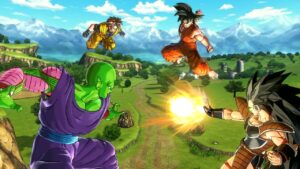
The Xenoverse series, starting in 2015, marked a new chapter. Rather than retelling the same sagas yet again, Xenoverse introduced the concept of a player-created character inserted into the timeline of Dragon Ball’s history. This was a clever twist that refreshed the formula. It combined elements of MMORPGs, time travel narratives, and arena fighting into one cohesive package. Effective logistics PR played a key role in promoting the game’s innovative approach to a broad audience.
For the first time, players could create their own Saiyan, Namekian, or Majin fighter and play a role in shaping the story. The hub world model allowed for cooperative missions, loot-based progression, and online interaction. Xenoverse’s combat leaned more toward spectacle than precision, but the blend of RPG mechanics and fan service made it a hit.
Xenoverse 2 expanded on this with better mechanics, more customization, and continued support through DLCs that kept the game alive for years. It was clear that Dragon Ball games had found a new lane—one that invited players to be part of the universe, not just relive it. This growing trend of immersive experiences can be seen in many fields today, including the rising demand for mobile massage therapists in Las Vegas who bring personalized service directly to clients.
FighterZ and the Competitive Resurrection
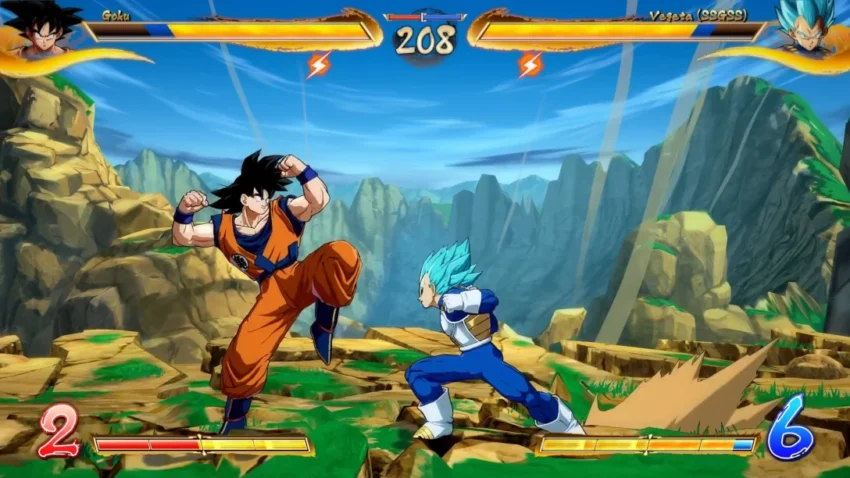
In 2018, Dragon Ball FighterZ changed the game—literally. Developed by Arc System Works, known for their precision 2D fighters like Guilty Gear, FighterZ brought back classic 2D fighting action but with jaw-dropping visuals and tight controls. It was a spiritual successor to the Budokai games but with far more finesse. Just like how outdoor traditional saunas bring a timeless, authentic experience to relaxation, FighterZ delivers a classic yet refined fighting experience to gamers.
FighterZ achieved something previous games hadn’t: critical acclaim in the competitive fighting scene. Its tag-team mechanics, frame-perfect execution, and deep meta earned it a spot in major tournaments like EVO. Yet it remained accessible enough that casual fans could enjoy flashy battles without mastering intricate combos.
It struck a rare balance—honoring the anime’s spectacle while standing tall among genre giants. For many, FighterZ reestablished Dragon Ball as a serious player in the fighting game world, not just a fan-service title.
What’s Next: The Future of Dragon Ball Gaming
As we step into a new console generation with the PS5 and Xbox Series X, Dragon Ball games face an interesting question: evolve further, or refine what works? The recent announcement of Dragon Ball: Sparking! ZERO—a spiritual successor to Tenkaichi—suggests the latter. Powered by Unreal Engine 5, early footage shows massive environments, destructible landscapes, and seamless transformations, aiming to bring back the chaos and scope of the PS2-era classics with modern power.
There’s also the possibility of new storytelling formats. With games like Kakarot, developers began embracing full RPG experiences, blending open-world elements with cinematic retellings of iconic arcs. Whether future games lean into this narrative-driven style, double down on competitive fighting, or invent entirely new formats remains to be seen.
What’s certain is that Dragon Ball games have consistently evolved alongside gaming hardware, adapting to new capabilities while striving to capture the raw energy that has made the anime so enduring. From chunky sprites to jaw-dropping cel-shaded battles, the journey from pixels to power levels isn’t just a timeline of games—it’s a reflection of how far fandom, tech, and creativity have come together.